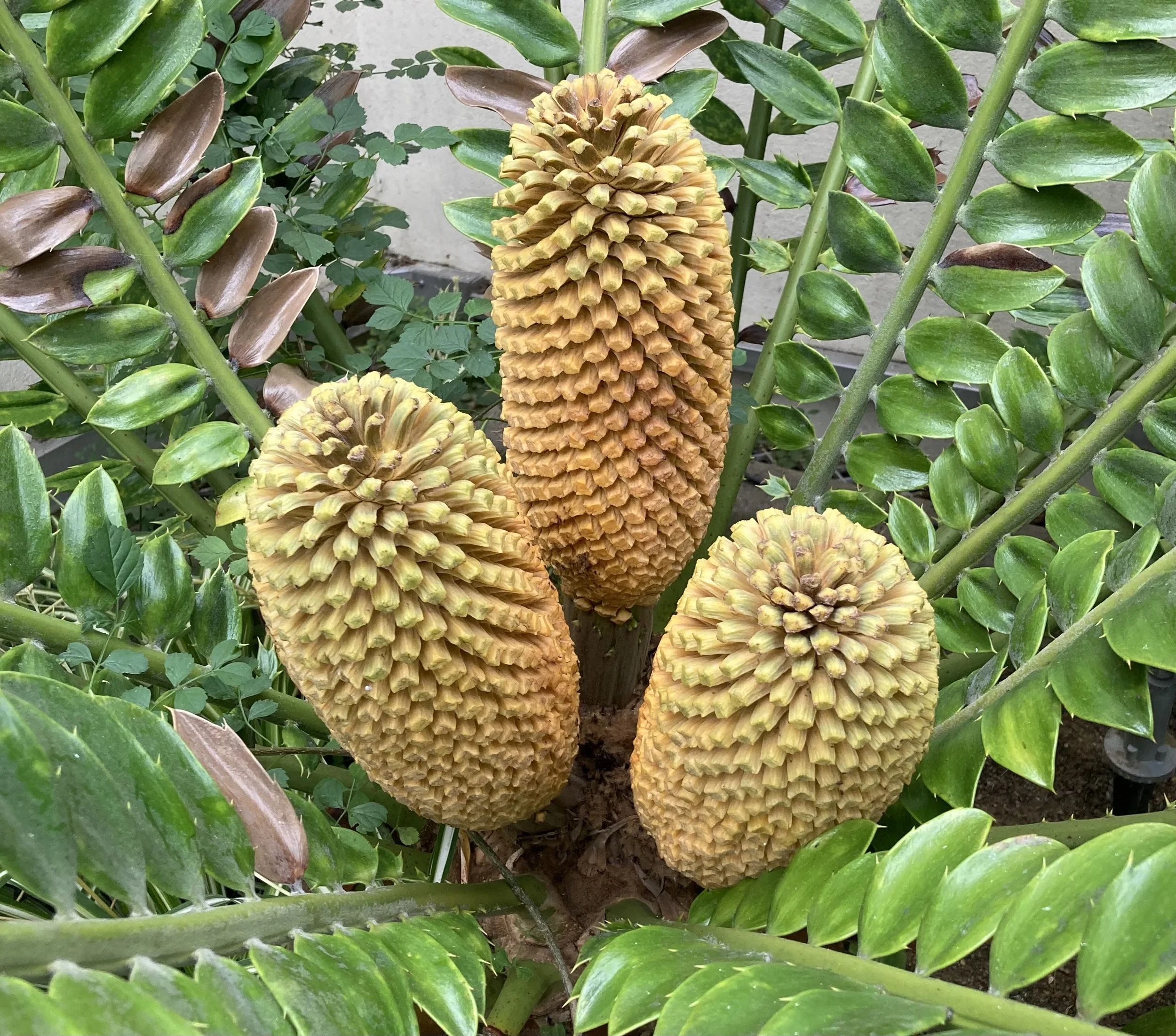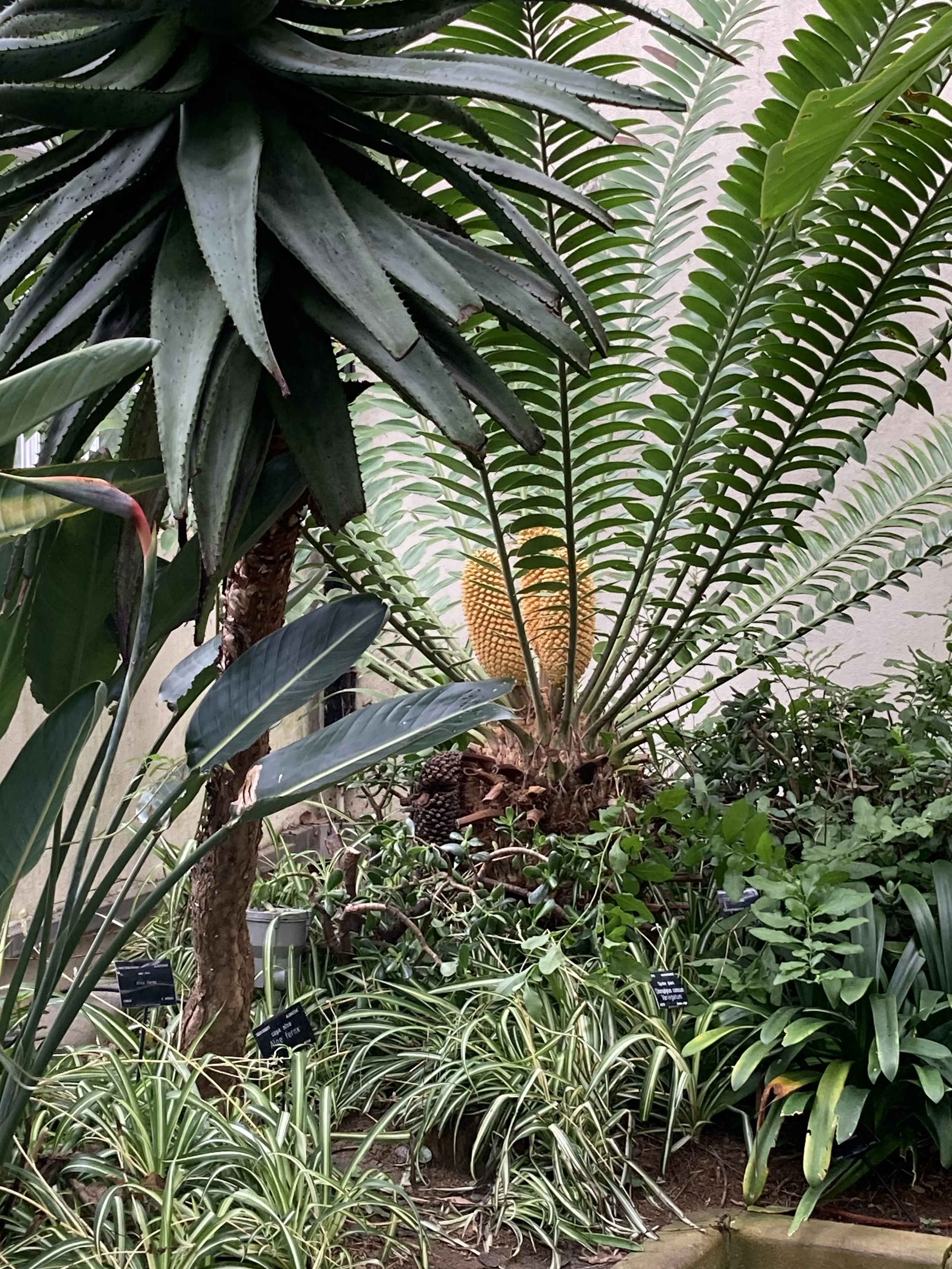
Encephalartos natalensis
Encephalartos natalensis Natal cycad South Africa, West Dome of the Pavilions
The pinnate leaves of these spectacular plants grow from the cylindrical trunk and fall away as they age, leaving a rosette of hard new leaves with opposite leaflets on the stem, each leaflet bearing a stout sharp prickle.
Being dioecious, a male plant is needed to pollinate the striking female cones which persist for several months.
The cycads comprise 3 huge and diverse families (Natal cycad is in the Zamiaceae family) which are found in sub tropical and tropical parts of the world as well as in a few temperate regions. Cycads are gymnosperms (as are conifers) meaning that their seeds are open in the air to direct pollination, often by a specific beetle. They are primitive plants whose fossilised remains have been found in rocks of the Triassic period. They would have been dinosaur food. But they evolved and seem to have diverged from the closely related Ginkgo in the Carboniferous period.
Although still widespread in the areas where it is endemic, in KwaZulu Natal (formerly Natal) and the north of the Eastern Cape, E. natalensis is designated ‘threatened’ because of the huge numbers of thefts by plant collectors and landscapers. (Kew reports that the rarest cycads sell for millions of pounds!) Damage is also caused by bark stripping for traditional Zulu medicinal and ritual use.
A group of this iconic plant is a recognised ‘national monument’ in the much visited, spectacular Valley of the Thousand Hills near Durban.