Davidia involucrata
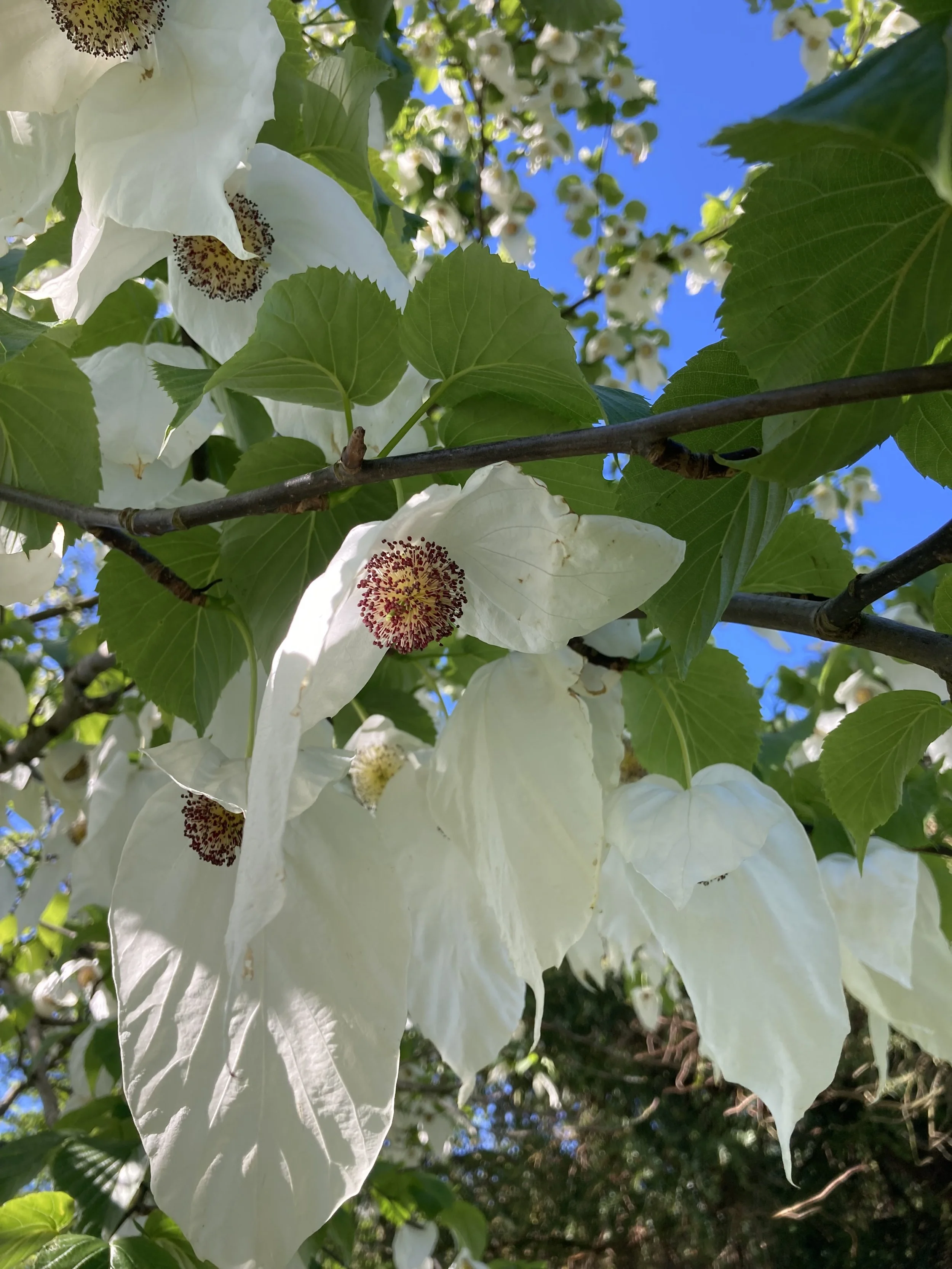
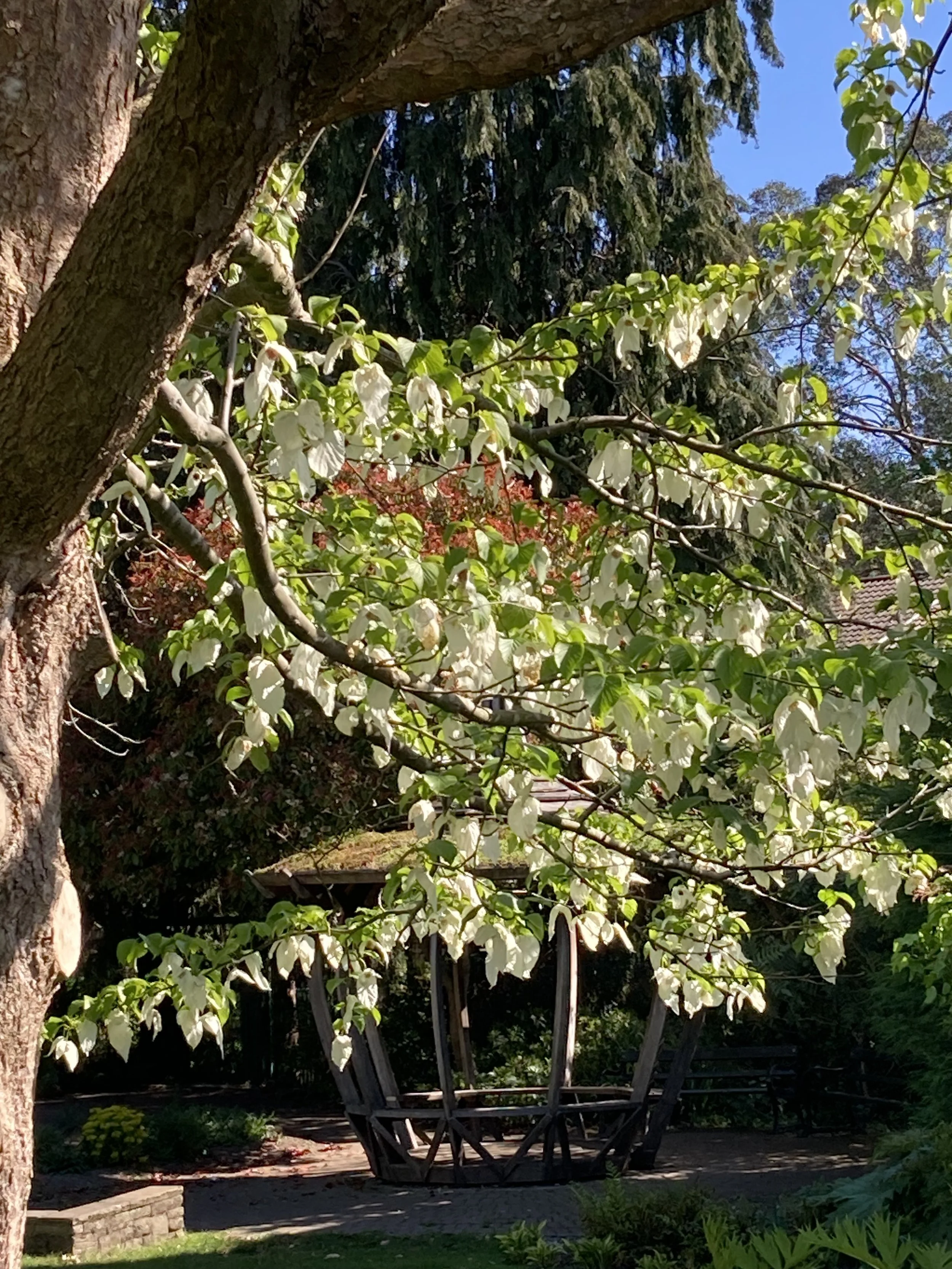
In full flower, this iconic Chinese tree is a stunning spectacle. Along every limb hang the large white bracts, in pairs of unequal length, sheltering the pretty inflorescences within and contrasting beautifully with the vibrant green leaves. These have a heart-shaped base and serrated edges, not unlike mulberry or lime. The bracts, reminiscent of doves or handkerchiefs (hence the common names) are green at first, but only after they turn white do various species of bees visit.
Sometimes the round seeds hang from their stalks all over the tree through winter, with very decorative effect.
French missionary, Pere David was the first westerner to find the tree in 1869, but it took another 30 years before another French priest, Pere Farges sent seed to M. Vilmorin’s arboretum near Paris where a tree flowered in 1906. This was a great disappointment to celebrated and prolific plant-hunter E.H. ‘Chinese’ Wilson who had sent vast quantities of seed to his employers, the Veitch nurseries, believing these to be the first in the west.
D. involucrata was named after Pere David and the specific epithet ‘involucrata’ simply means having flowers surrounded by bracts. The tree is the only species in the genus Davidiaceae.
A tree planted by FOBS in 1994 grows in the Marnock Garden; an older one still thrives in the Asia Garden (Area N).
Unsurprisingly, it’s an RHS Award of Garden Merit holder.