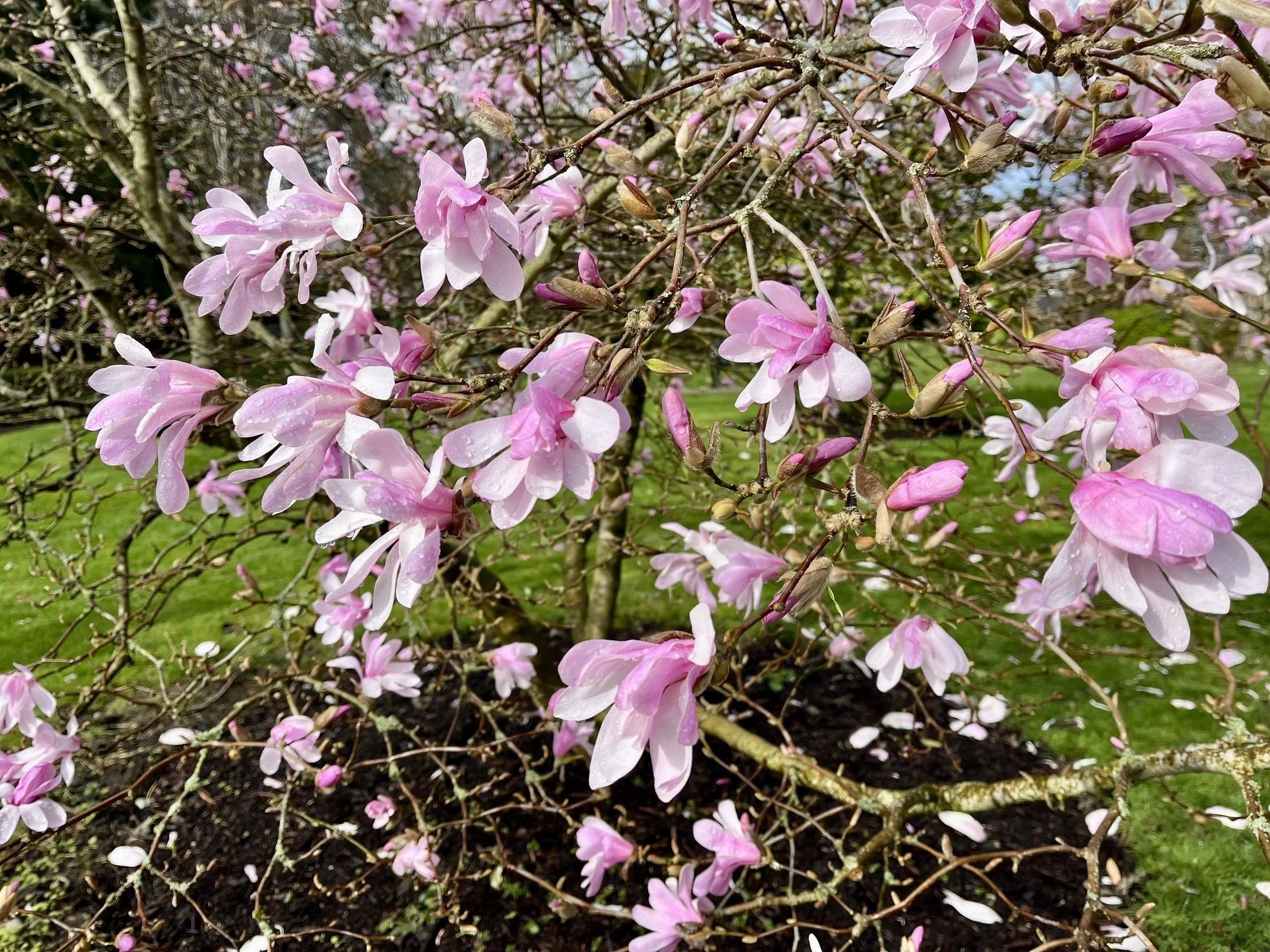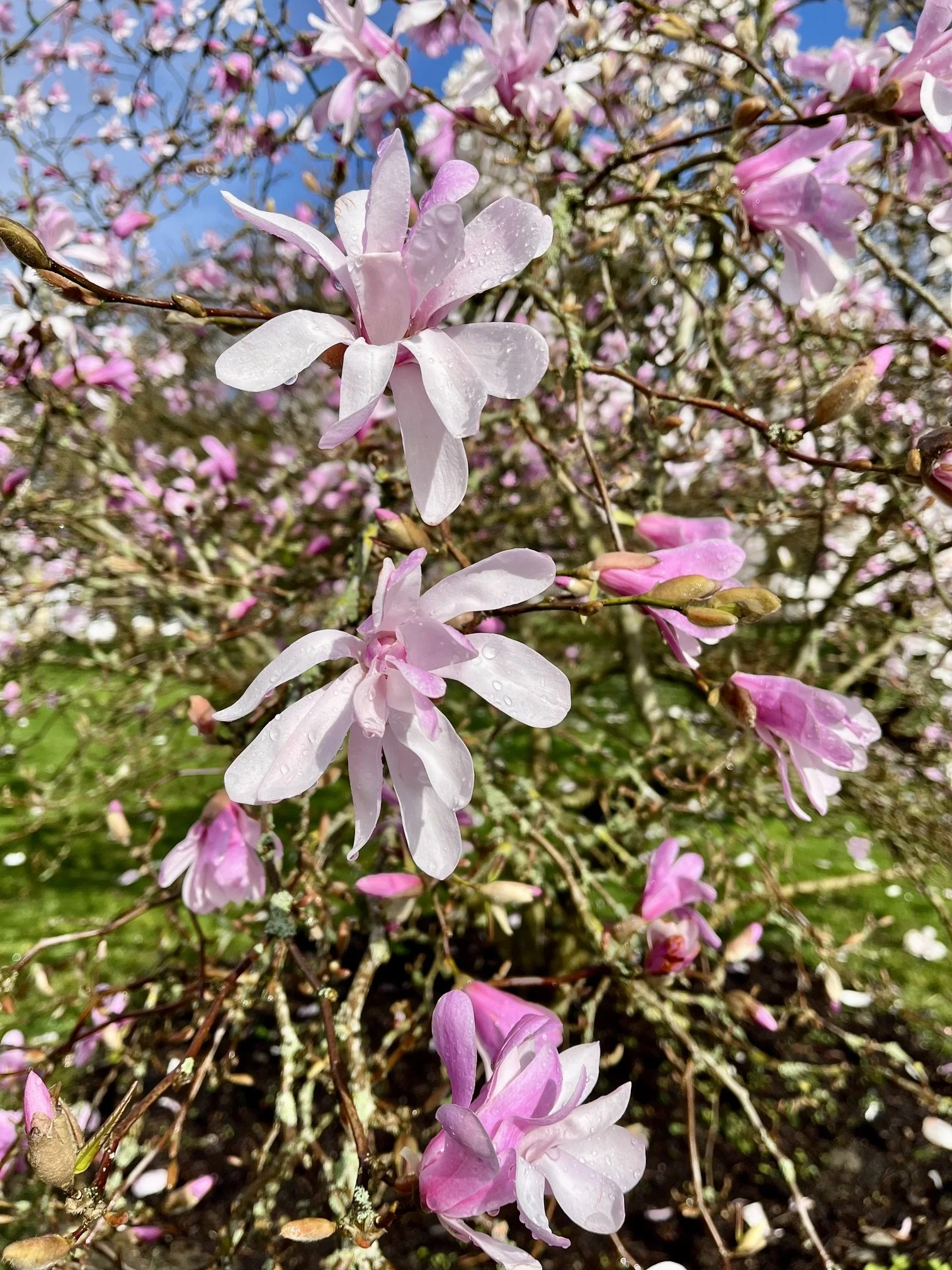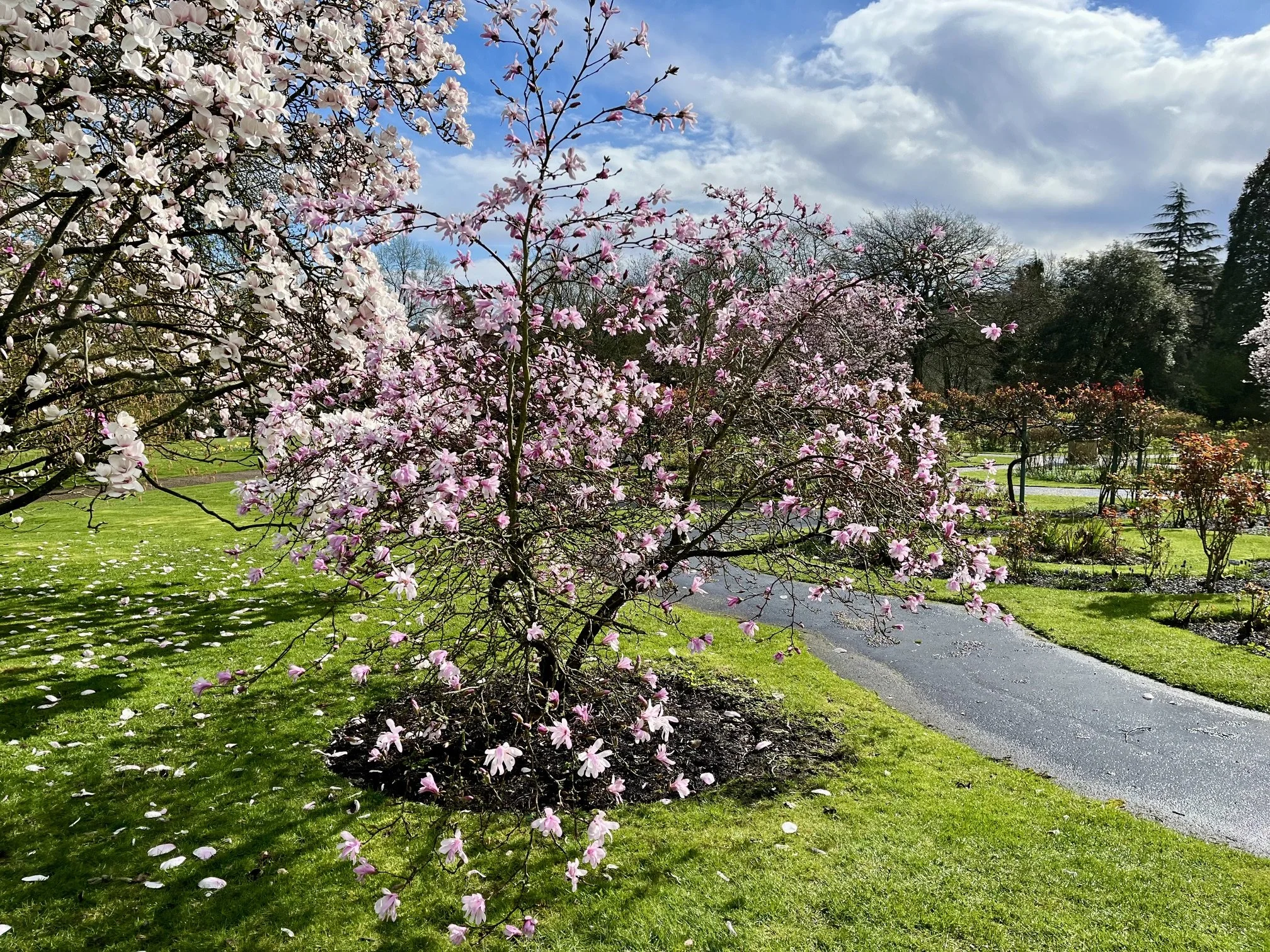
Magnolia x loebneri ‘Leonard Messel'
Magnolias at this time of year look magnificent and you’ll see a group in full glory adjacent to the Rose Garden as you head up towards the Mediterranean garden. Amongst the smaller ones is Magnolia x loebneri ‘Leonard Messel’, part of one of the most important and variable group of garden hybrids, including all crosses between Magnolia kobus and Magnolia stellata. The hybrid was first made in early 20th century Germany, by Max Löbner of Dresden then Bonn Botanical Gardens.
‘Leonard Messel’ is a cross between M.kobus and M.stellata ‘Rosea’ and was raised by James Comber (c.1866-1953) head gardener at Nymans, Sussex and registered in 1955. It was awarded the prestigious Award of Garden Merit (AGM) in 1984. James Comber worked for Leonard Messel (1872-1953) who inherited Nymans and together they formed a great partnership combining inspiration and horticultural expertise. Nymans is now in the care of the National Trust and contains some of the Trust’s most important plant collections.
‘Leonard Messel’ is understandably a popular plant with a number of advantages for a small garden. It is of a compact slow growing form, 4-8 metres spread and height over 20 or more years and often grown as a multi-stemmed plant. The flowers emerge before the leaves as in the parents, the leaves are similar to M.stellata.
The fragrant flowers are of a beautiful two-toned goblet shape and appear at an early age. Similar to M.stellata, they are white on the inside and purplish-pink on the outside and at their peak they form an almost solid sheet of crimson-purple buds. The flowers are also less susceptible than most magnolias to late frosts.
‘Leonard Messel’ is best in a reasonably sheltered spot in full sun or partial shade, and in a moist, well-drained soil but is tolerant of a wide range of soil types, clay (not waterlogged), loam or sand and all aspects except north. Little pruning is required; remove dead, damaged or diseased branches in midsummer.