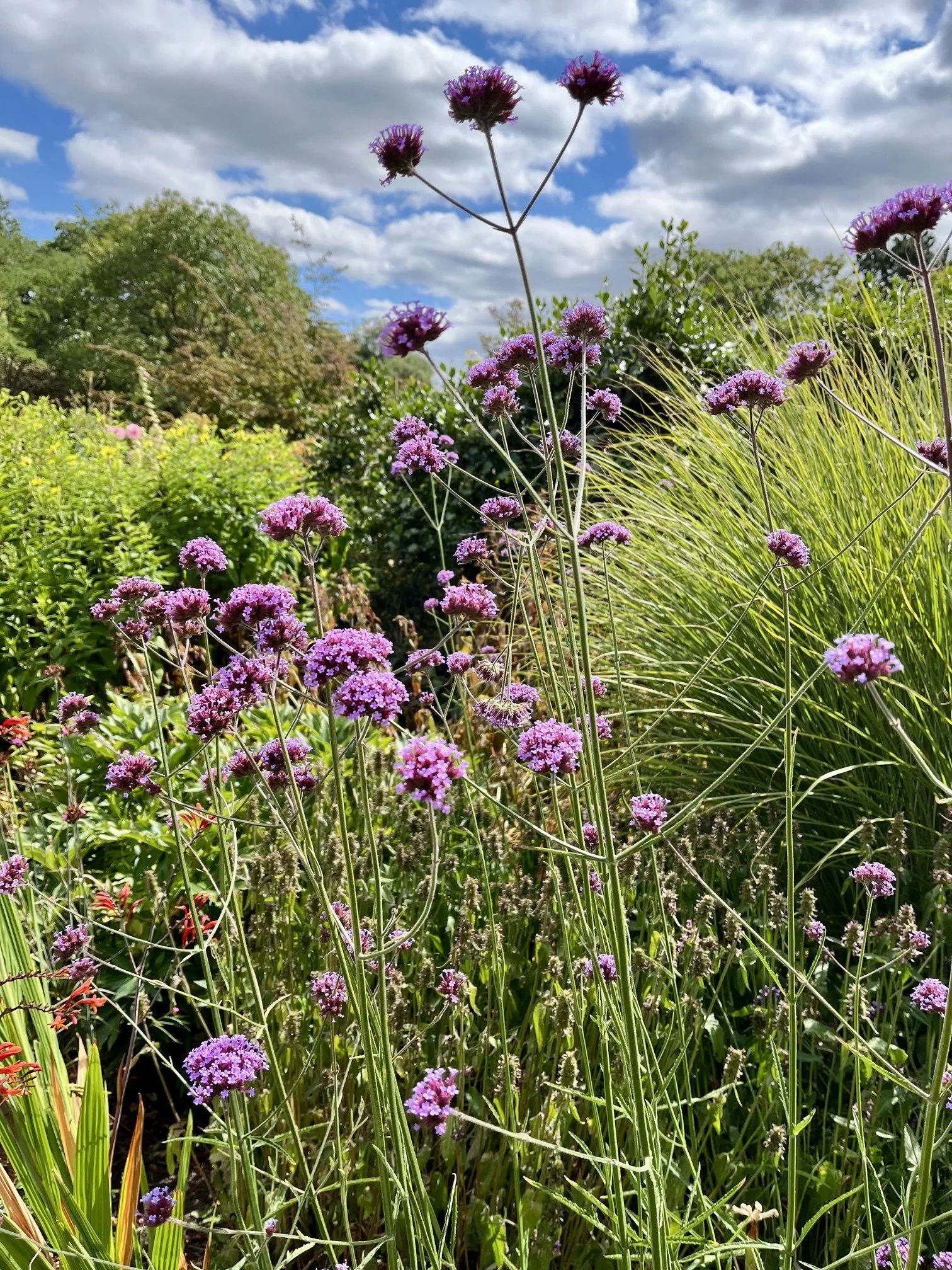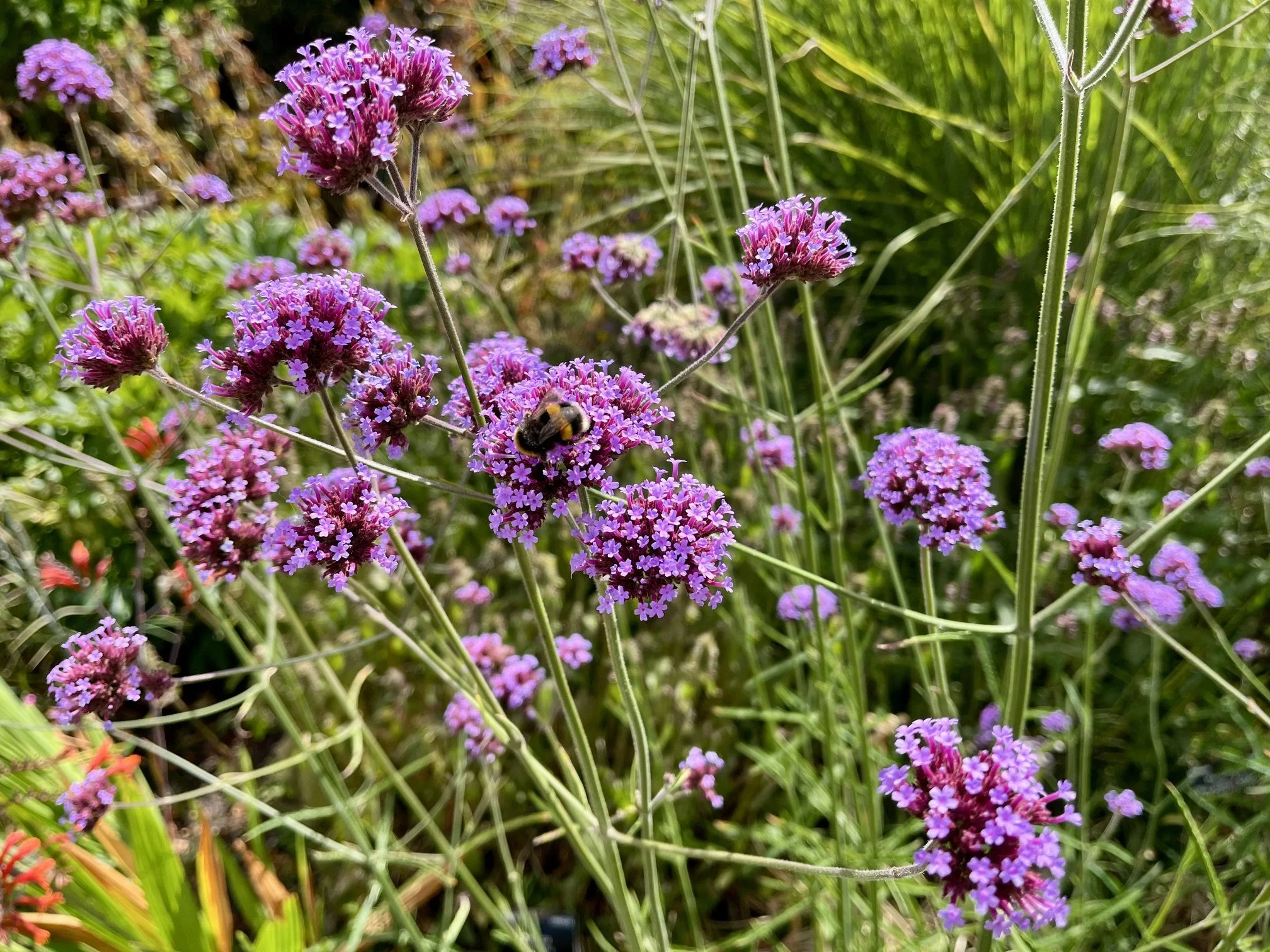
Verbena bonariensis
In the last 20 years or so Verbena bonariensis has become a deserved ‘best seller’ perennial flowering from mid-summer to the first frosts. Often when a plant becomes fashionable, and is seen ‘everywhere’ it can become diminished by familiarity, and yet the many good qualities that make this plant so popular are self-evident. Beth Chatto and Christopher Lloyd were both extolling its virtues in their writings of the late 1970s and early 1980s.
In the Gardens Verbena bonariensis can be found in a number of places; at the back of the Pavilions in the Four Seasons Garden, on the corner near the sub-tropical bed adjacent to the Pavilions, and along the Mixed Borders.
Originating from South America it is native in a range stretching from southern Brazil through to Argentina, Uruguay and Chile, and has a number of common names including, ‘Argentinian vervain’, ‘South American vervain’, ‘tall verbena’ and ‘purple top’. Of its scientific name, the second part, the specific epithet, bonariensis means ‘of Buenos Aires’.
In habit it forms a stiff upright clump to 1.5m, so no staking needed, and has rough wiry branching stems with leaves wrinkled and oblong. This branching pattern enables it to be a ‘see through’ plant at the front of the border or further back to give height. It also means it integrates well with other plants in a variety of garden situations.
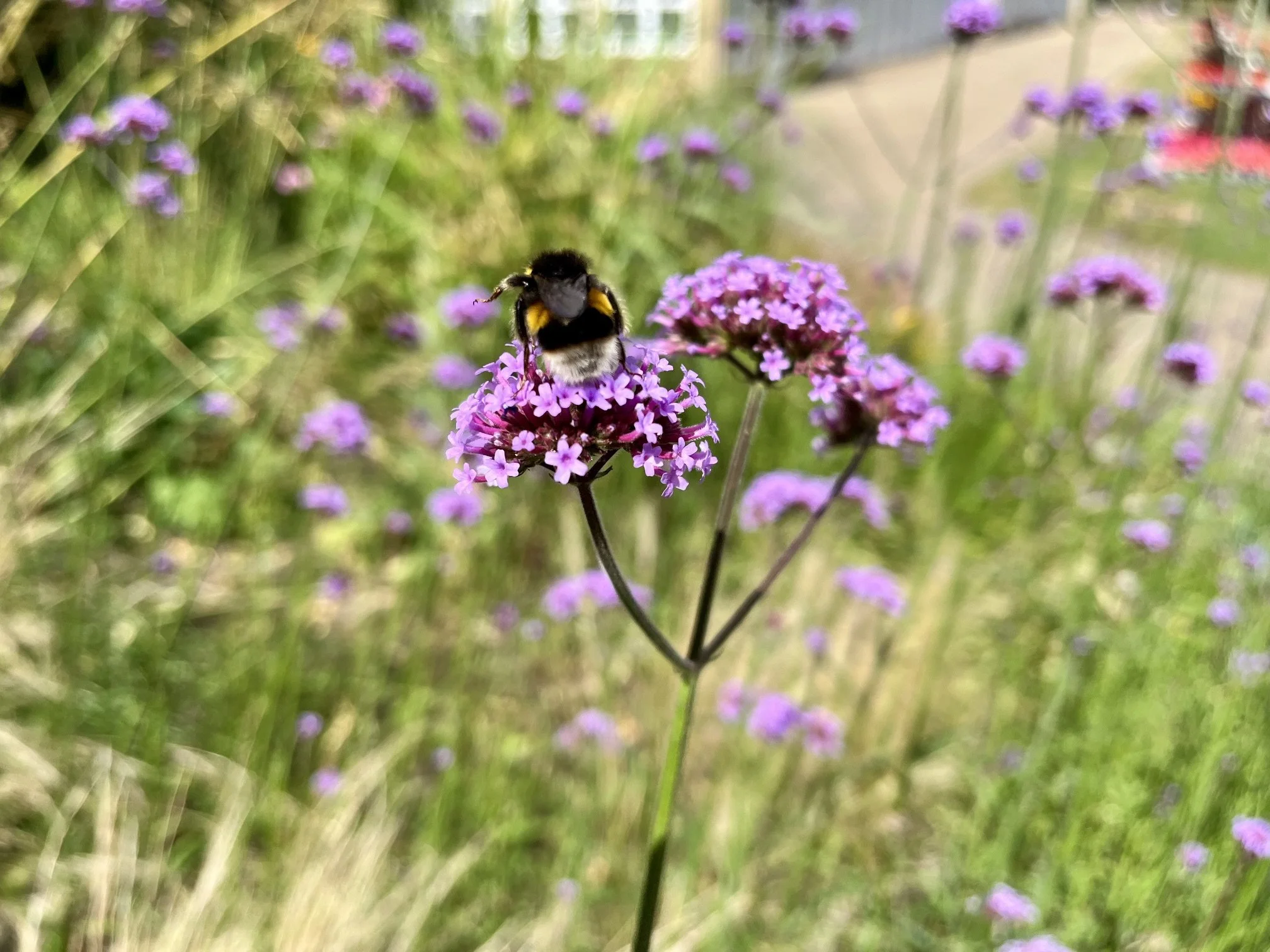
The flat inflorescences are full of small lilac purple scented flowers which are very popular with bees, moths, butterflies and hoverflies. It has rich nectar and pollen and later in the season the seeds provide food for birds and other animals. The long stalks and seed heads also provide winter interest as skeletal silhouettes.
It is frost hardy to -10C and seeds prolifically which depending on your perspective, is either a bother, or alternatively a plant to be enjoyed as an editable and dynamic filler for gaps. Young plants often emerge in the spring even if the original plant has succumbed to a particularly cold winter. It tends to be short lived from 2-5 years. In mild winters it can become a shrubby plant and it is usual to prune it in early spring to 10 cms or so, otherwise they become straggly and fall over.
Advice is it is best grown in moist but well drained soils in full sun in south and west facing aspects. In this summer it is a stand out plant so it does well in the dry garden as Beth Chatto pointed out many years ago.
It had been introduced into British gardens by 1732 and was first recorded out of cultivation in Bristol in 1949. It now has a wide distribution mostly near to human habitations or in urban areas in southern Britain and it is no surprise to see it popping up between paving stones and other such ‘waste’ places.