Liriodendron tulipifera
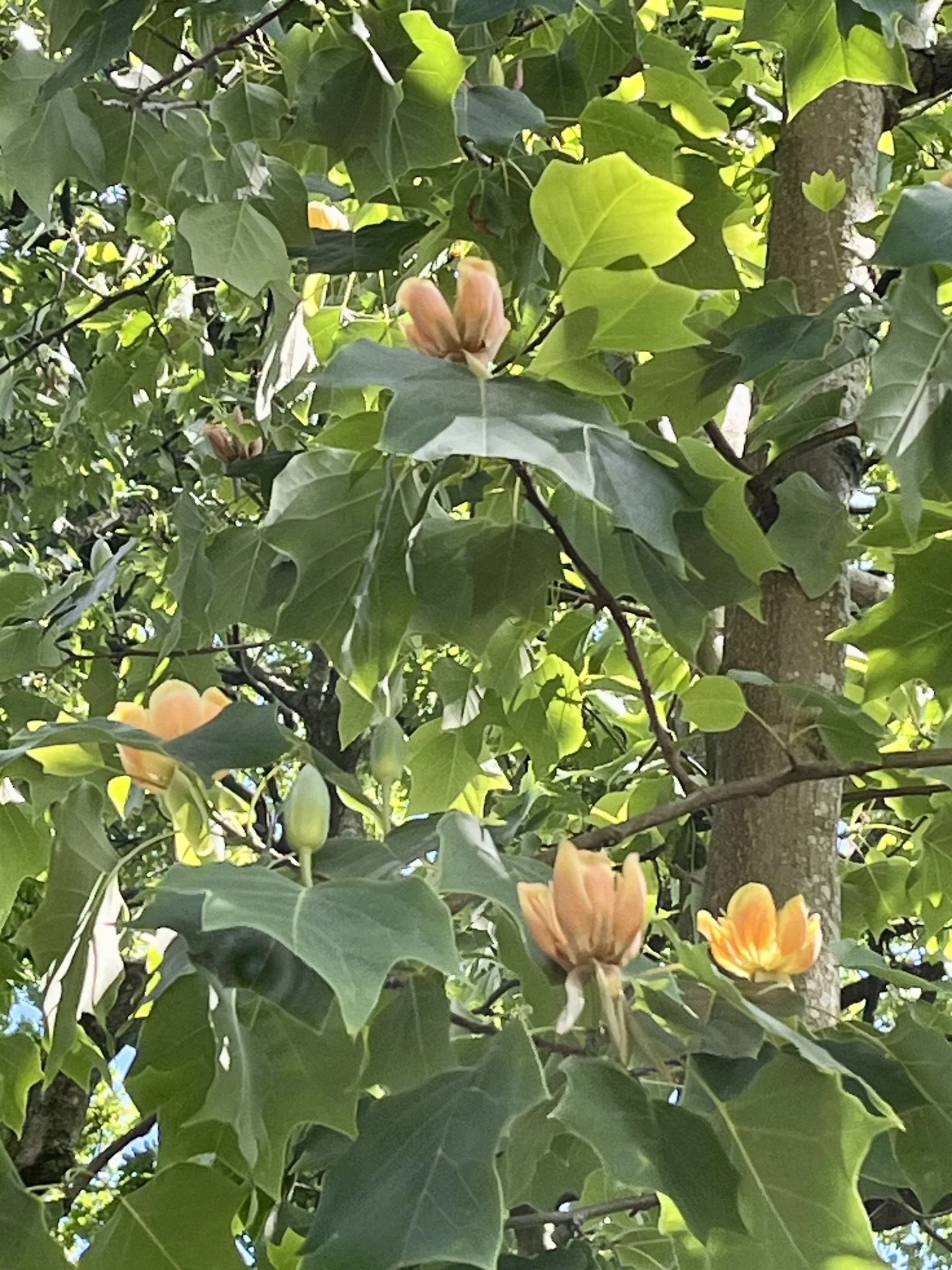
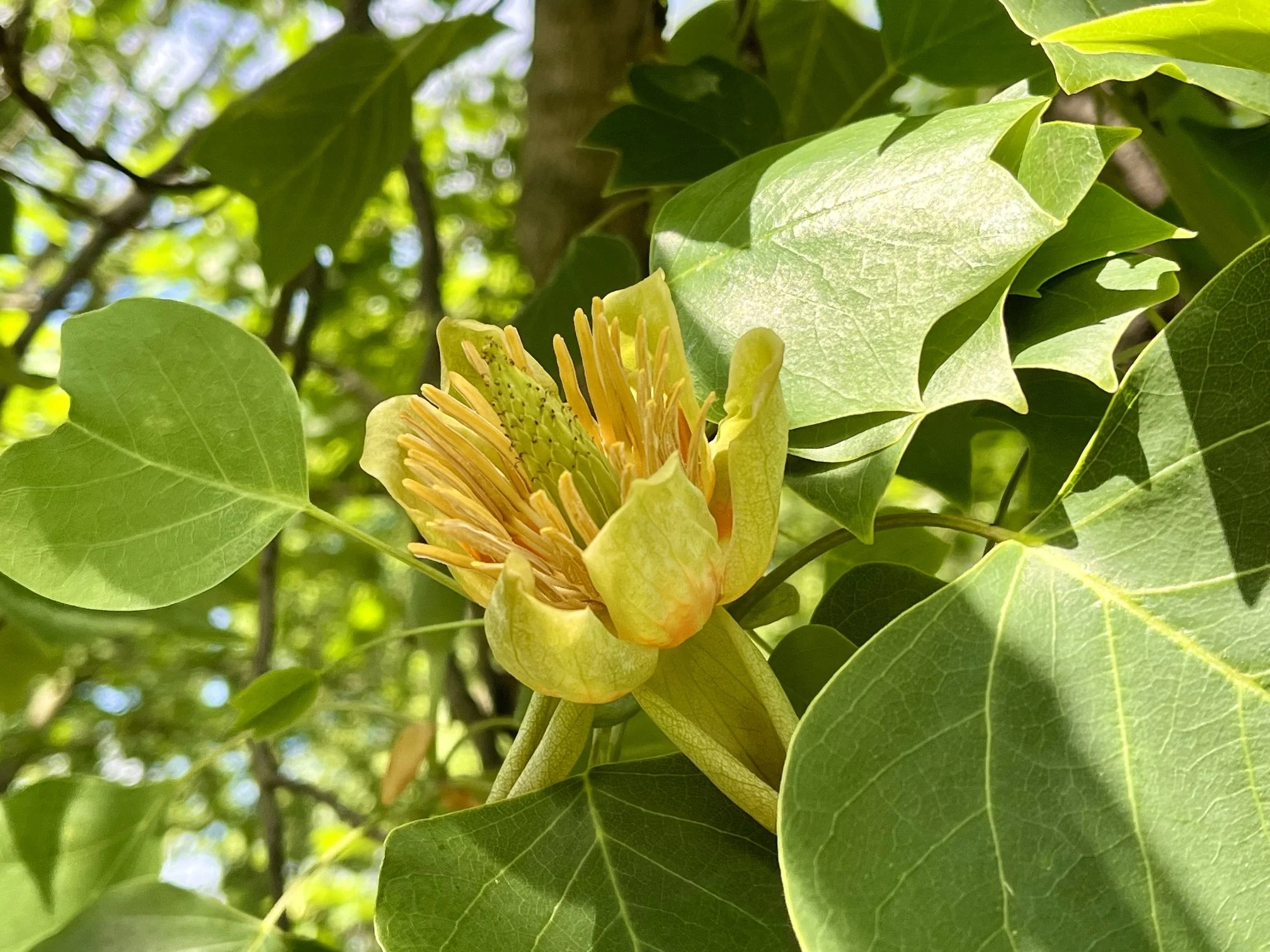
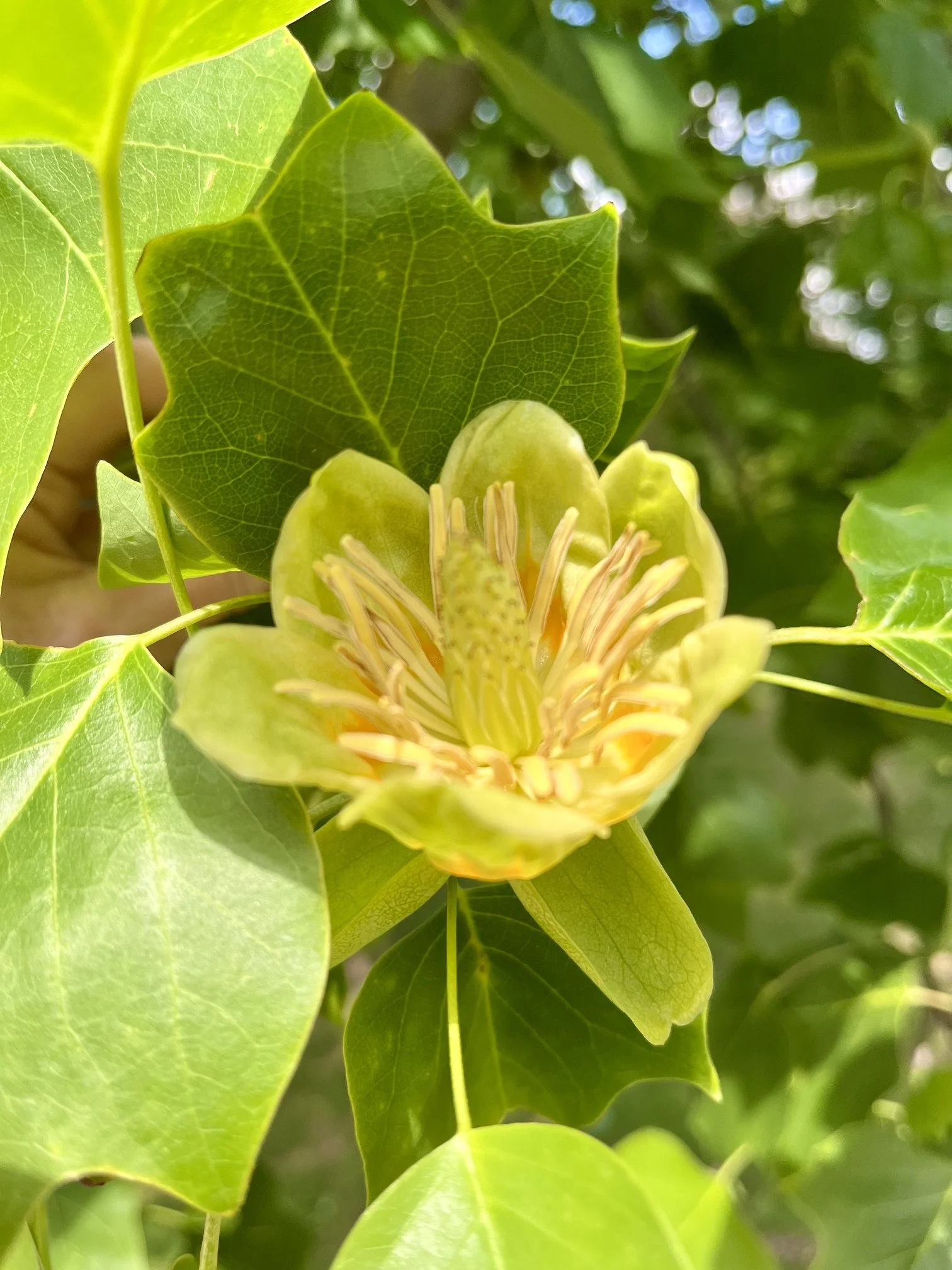
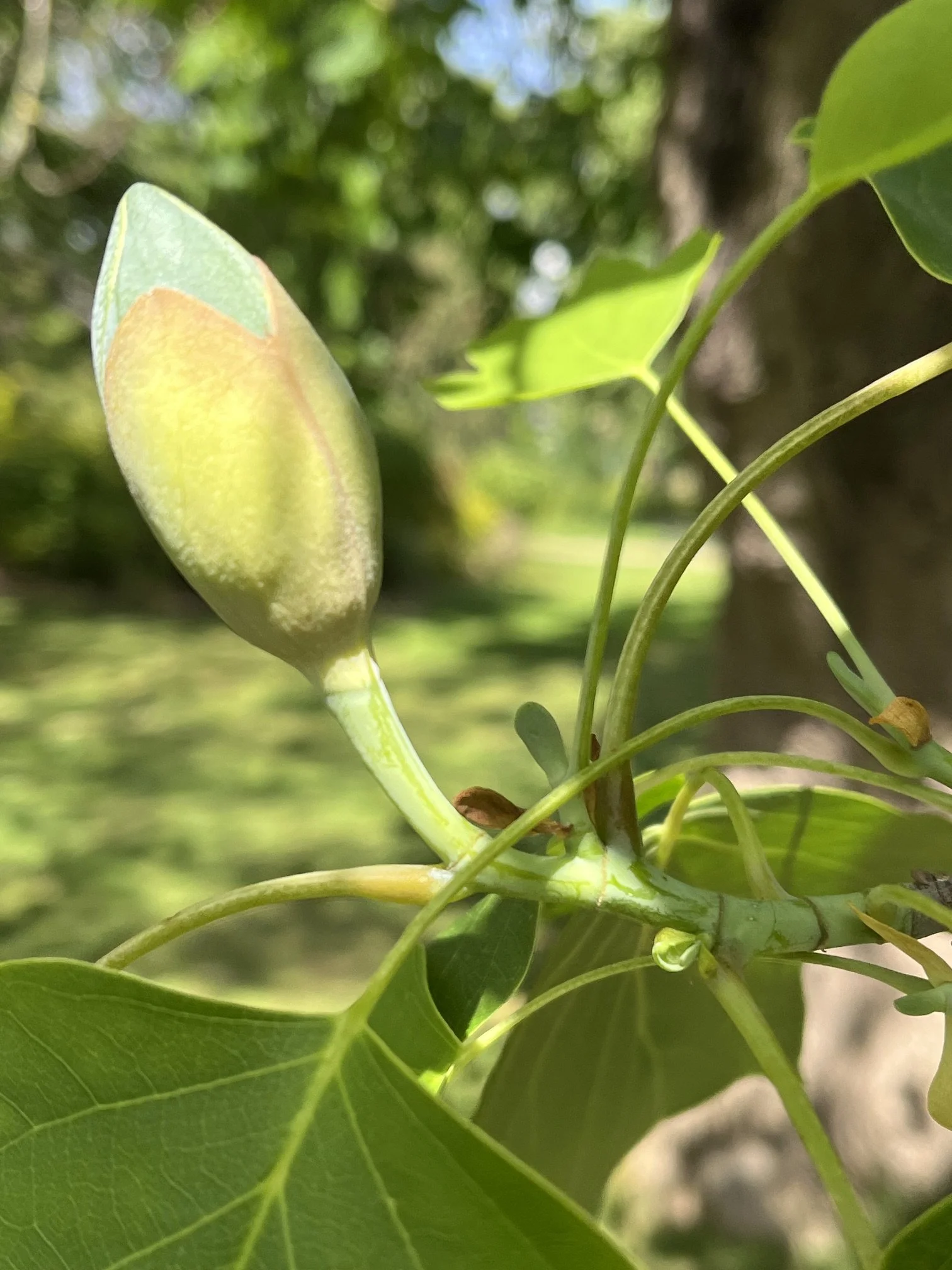
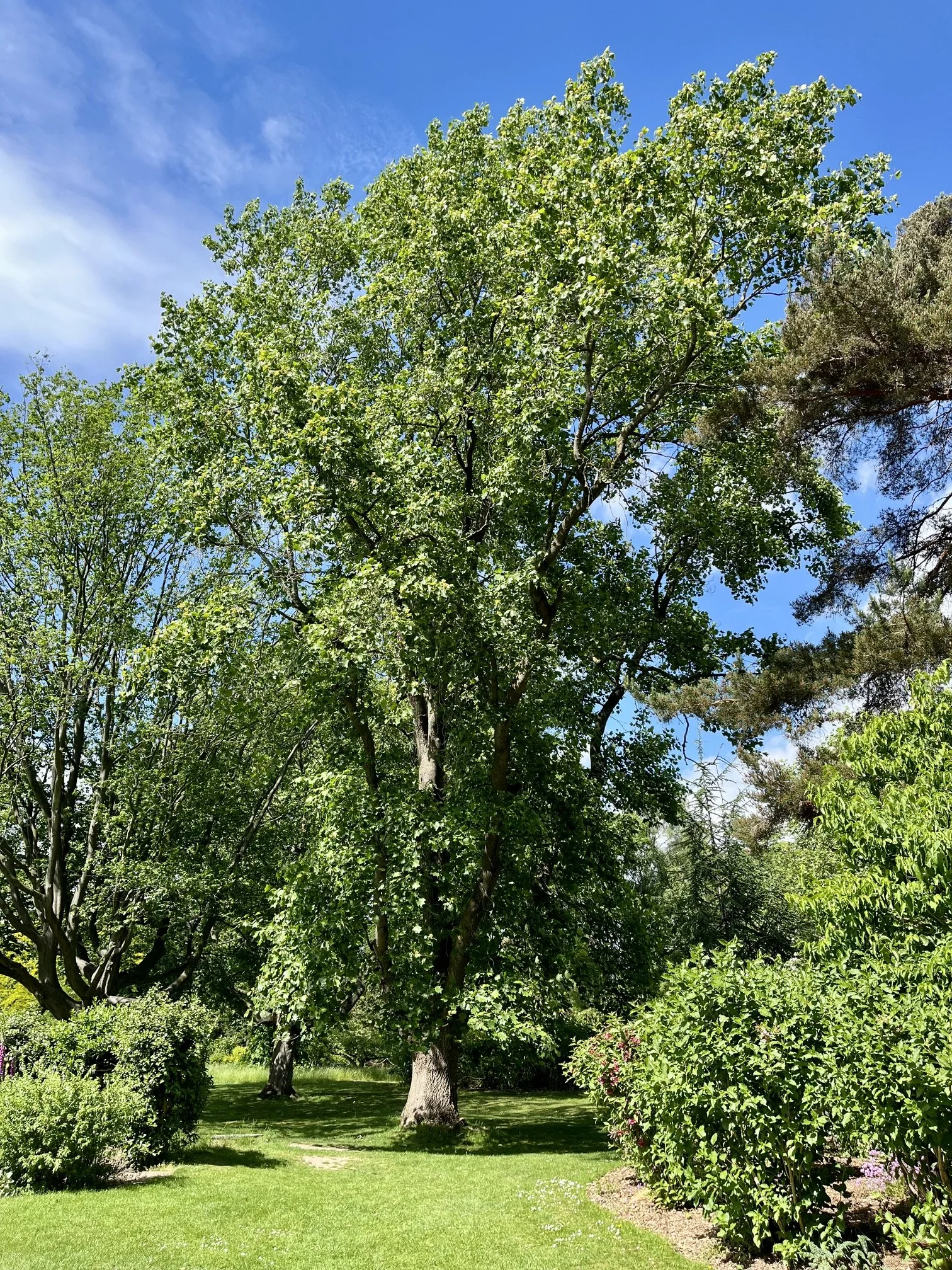
Liriodendron tulipifera, commonly called the ‘tulip tree’ because of the shape of its flowers is a large, stately, deciduous tree from eastern North America typically growing to 50m in its native habitat, and to 20-30m in the UK. It is understandably a popular choice in parks and gardens throughout the temperate world. Introduced into the UK around 1638, it was at the time one of the most newly coveted ‘trophy’ trees for its showy flowers, and distinctively lobed ‘duck’s foot’ shaped leaves. There are two examples of this tree in the Gardens, one at the end of the central Broadwalk at the fountain end of the East Lawn (all but one photograph) and the other at the top of Osborn’s Field.
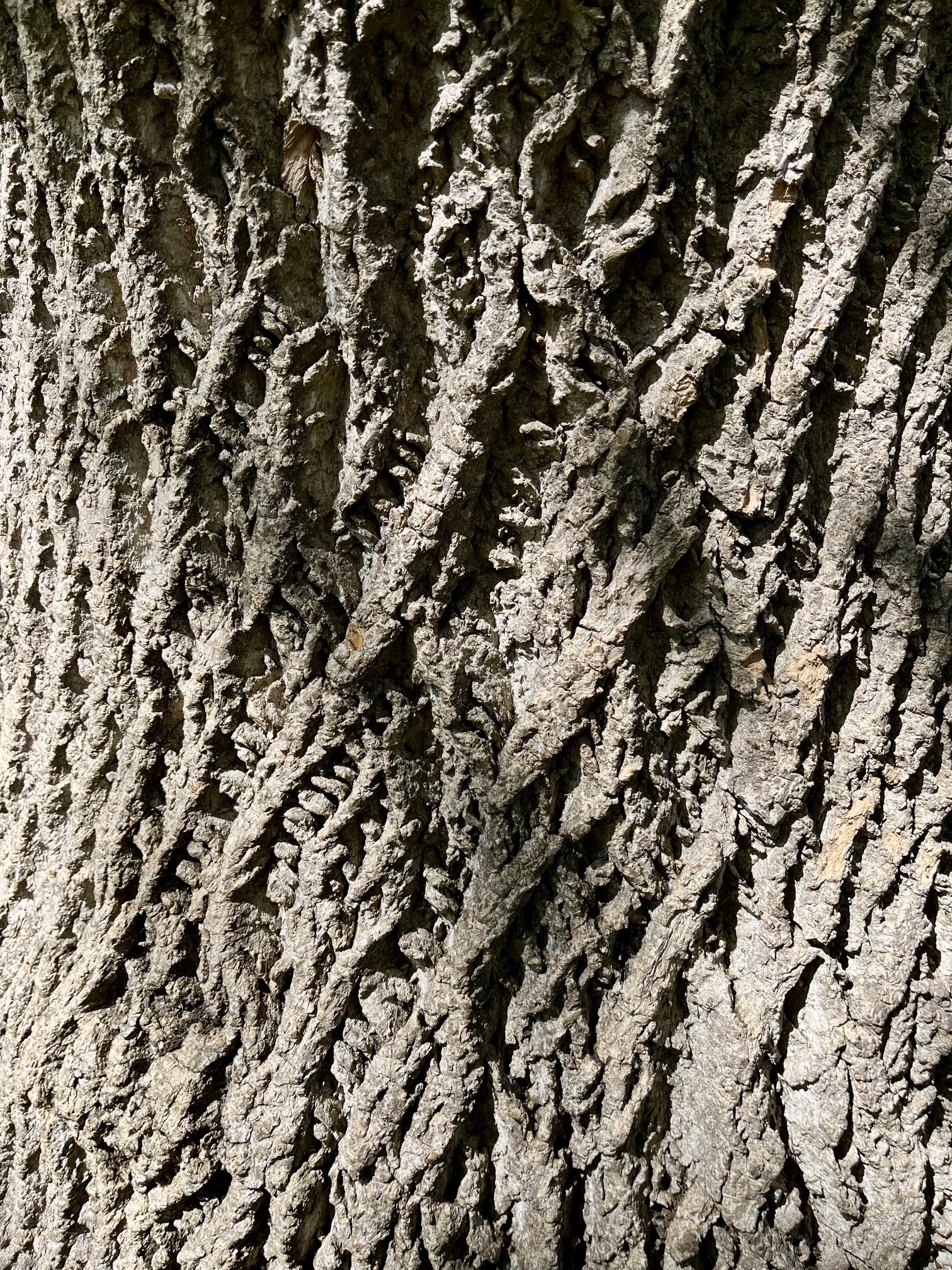
This is a vigorous tree deciduous tree with flowers up to 6cm across, pale green and banded with orange at the bases and within. Its leaves are mid-green in colour and large, up to 15cm long, and in autumn turn butter yellow. Its bark comes in a wide variety of patterns, with fissures and intricate vertical ridges, often forming a herringbone type pattern adding further character.
If you have space to grow this tree then it is tolerant of a wide range of conditions including urban pollution however it does not do well in dry soils prone to drying out in summer. It is fully hardy, grows in full or partial shade, in all but chalky soils and tolerates exposed or sheltered locations.
RHS Wisley holds the National Collection of Liriodendron spp. With 18 different types of rare and unusual cultivars including more upright forms such as Liriodendron.tulipifera ‘Fastigiatum’ although this can still reach 12m. This is sometimes known as the ‘tulip poplar’ tree because its habit is similar to the ‘Lombardy poplar’.
The fossil record of Liriodendron spp. evidences the species was once widespread across North America, Europe and Asia but is now represented by two living species, Liriodendon tulipifera and Liriodendron.chinense, the latter from China and north Vietnam. A hybrid between these two species, Liriodendron x sinoamericanum was made in China in the 1960s and then again by Clifford R. Parks at the University of Carolina in the 1970s from which a seedling arose named ‘Chapel Hill’. An example of this tree can be found along from the Evolution Garden in the Long Border, the photograph shows a more apricot hue to the flowers.
From a gardening perspective it is this species which is showing promise from Wisley experiments. Over the last three years the RHS have been trialling with annual coppicing in the same way as Paulownia spp. and Catalpa spp. That is large trees with ornamental foliage are pruned hard each year resulting in overall compact growth but the annual coppice prune stimulates vigorous growth, producing large decorative and dramatic leaves compensating for the lack of flower. The trees can then potentially grow in smaller spaces.
Liriodendron tulipifera
Lirirodendron x sinoamericanum ‘Chapel Hill’